Our Special Exhibition Śākyamuni in Gandharan Art: The Buddha's Life and Images of Reverence will be on view from May 23 through September 27, 2026.
Gandhara is widely regarded as the region where the earliest images of the Buddha Śākyamuni were created. Among the defining features of these sculptures is the radiant halo, or nimbus, positioned behind the Buddha's head. Other characteristic traits include the protuberance on the top of the head (uṣṇīṣa) and a monastic robe rendered as a single, continuous garment draped around the body. The Buddha is also depicted at a larger scale than surrounding deities and attendants, visually expressing the deep veneration he inspired as an awakened and extraordinary being.
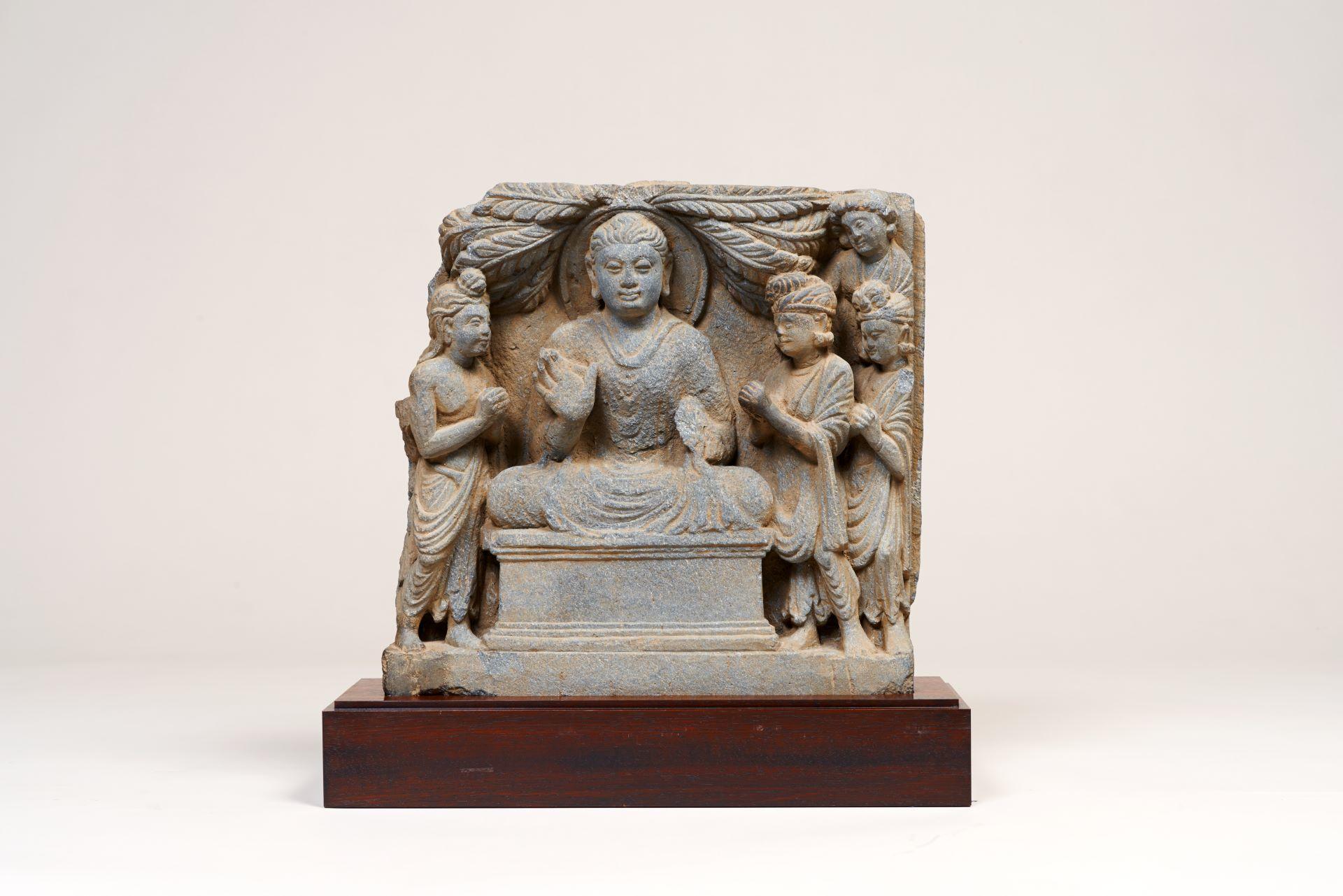
This exhibition brings together Gandharan representations of the Buddha Śākyamuni that portray events in his life. The Prophecy of the Seer Asita depicts the infant Buddha already marked by a luminous nimbus. Brahmā's Entreaty to Preach the Doctrine captures the moment when the deities Brahmā and Indra beseech him to share with people the insight he attained at awakening, and he consents to teach. Thereafter, he traveled widely to expound the Dharma, drawing large gatherings of people; deities and animals likewise attended his sermons.
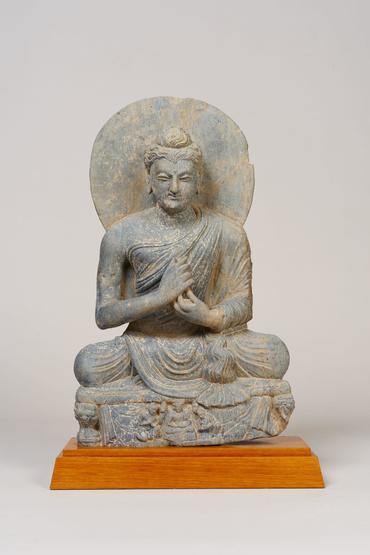
In Seated Buddha in Dharmacakra Mudra and The Discourse at the Indrasaila Cave, Śākyamuni appears composed and majestic. Following his entry into final nirvana, stupas were built to enshrine the Buddha's relics. Reliquary in the Form of a Stupa takes the shape of a small-scale stupa and Cylindrical Reliquary is adorned with gold leaf.
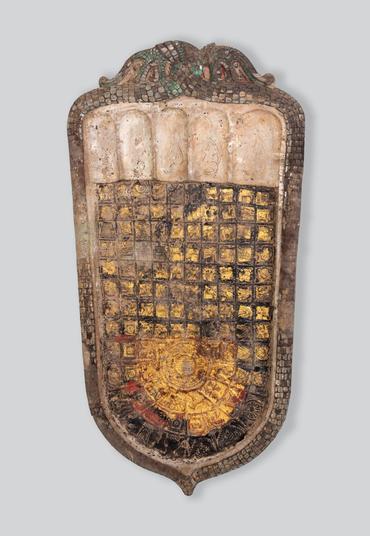
On special display is Buddha's Footprint, produced in myanmar around the 17th century. Representing the Buddha's left foot, the surface is elaborately ornamented.
Its impressive scale and lustrous finish underscore the deep devotion accorded to the Buddha Śākyamuni.
In pictorial traditions, the Buddha's skin and robes are rendered in gold, conveying awe and reverence for the World-Honored One and suggesting the radiance of his presence. Śākyamuni with Sixteen Benevolent Deities and Parinirvāṇa of the Buddha (Butsu nehan-zu) exemplify this convention. In both works, the Buddha is depicted noticeably larger than surrounding deities and figures, emphasizing his preeminent importance.
Together with the Gandharan images of the Buddha in our Permanent Exhibition, we invite you to explore how the Buddha has long been revered by both human and celestial communities.
Featured Artworks
① Seated Buddha in Dharmacakra Mudra ca. 3rd century
The Buddha displays the conventional preaching mudra. The aureole behind him signifies his enlightened state.
② The Discourse at the Indrasaila Cave 2nd-3rd century
The deity Indra approaches the meditating Buddha in a cave and poses a question. The Buddha responds by delivering the Dharma.
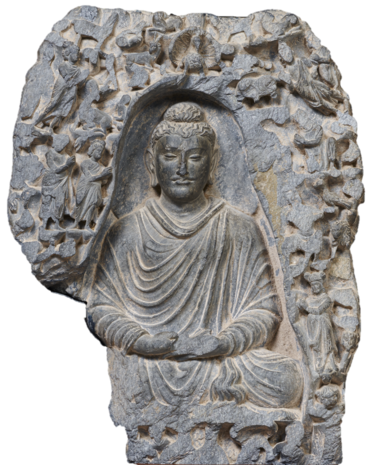
③ Brahmā's Entreaty to Preach the Doctrine ca. 3rd century
The deities Brahmā and Indra appeal to the awakened Buddha at the center to teach the Dharma.
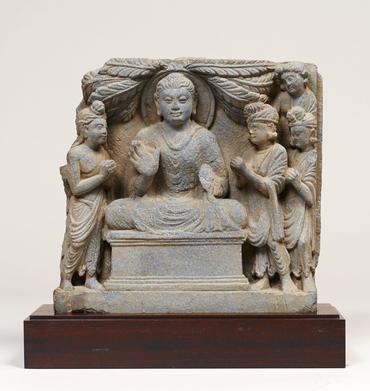
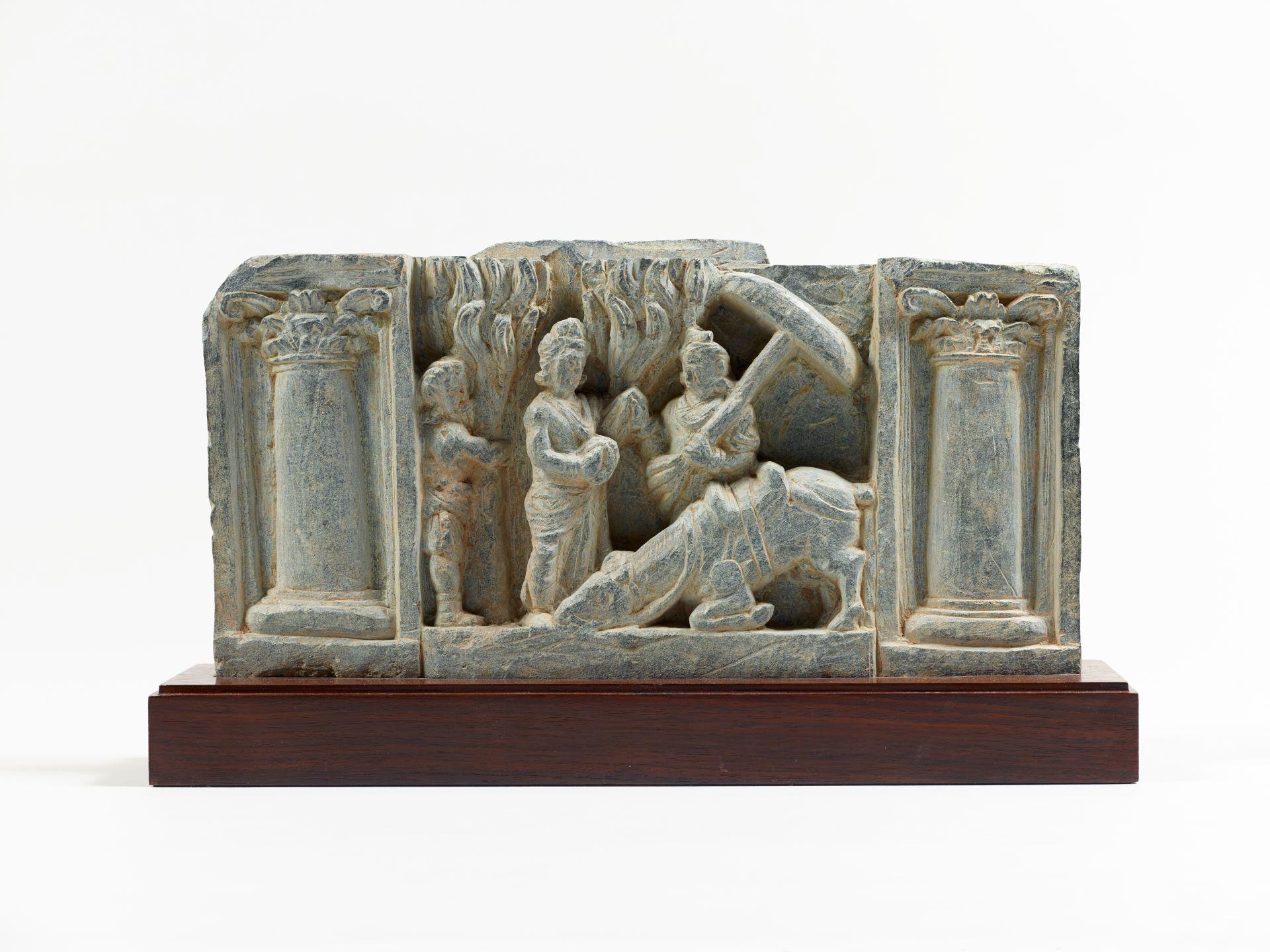
④ Parting from His Beloved Horse 2nd-3rd century
Śākyamuni departs the palace to renounce worldly life and bids farewell to his beloved horse and charioteer.
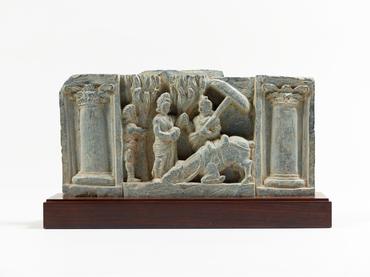
⑤ Parinirvāṇa of the Buddha (Butsu nehan-zu) Edo period, Horeki 10 (1760)
This scene depicts the Buddha Śākyamuni entering final nirvana. Inscribed on the reverse are the names of the donors who formed a karmic bond through sponsoring the work.
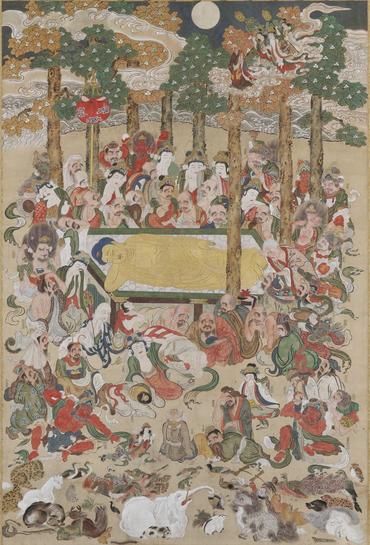
⑥ Special Display: Buddha's Footprint Possibly 17th century
Motifs of the sun and moon, animals, plants, and ritual implements are arranged within the footprint. Two serpents encircle it as guardians.