Information
2025/07/03
Information
Special Exhibition "Amitābha Buddha: Resides, Guides, and Manifests "
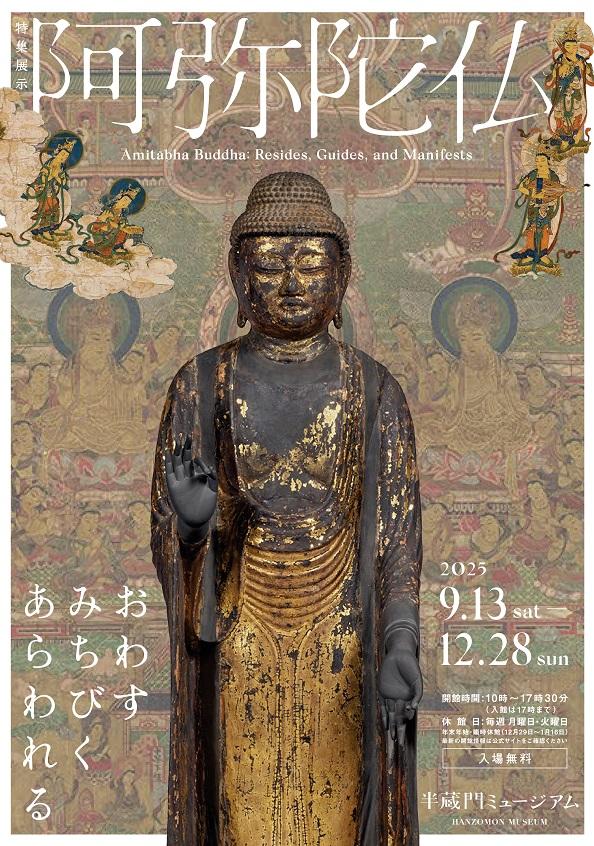 The upcoming Special Exhibition "Amitābha Buddha: Resides, Guides, and Manifests" will be on view from September 13 to December 28, 2025.
Amitābha Buddha featured in this exhibition is lord of the Land of Bliss or Western Pure Land, venerated more than the buddhas of other pure lands for his vow: never fail to accept those who aspire to reach and be reborn in the Land of Bliss.
We invite our visitors to first meet the newly repaired Standing Amitābha Buddha along with the principal image unique to Shin Buddhism (Jodo Shinshu) known as "dharma body of skillful means (hoben hosshin)." Glimpses of how the Buddha guides and welcomes people to the Land of Bliss are offered in Descent of the Amitābha Triad and Descent of Amitābha and Ten Attendants. Taima Mandala and Seikai Mandala each depict the scenery of the Western Pure Land where Amitābha Buddha resides. The resplendent palace and remarkable plants may well arouse aspiration in the devotees for this paradise. Amitābha Triad in Zenkoji Temple Style illustrates the Buddha as he manifested in the human world to save the people in ancient India from a plague.
Preaching in the blissful Pure Land, Amitābha Buddha guides all those in suffering to spiritual liberation. Here, anyone is welcome to experience the warm embrace of the Buddha's infinite lovingkindness and compassion.
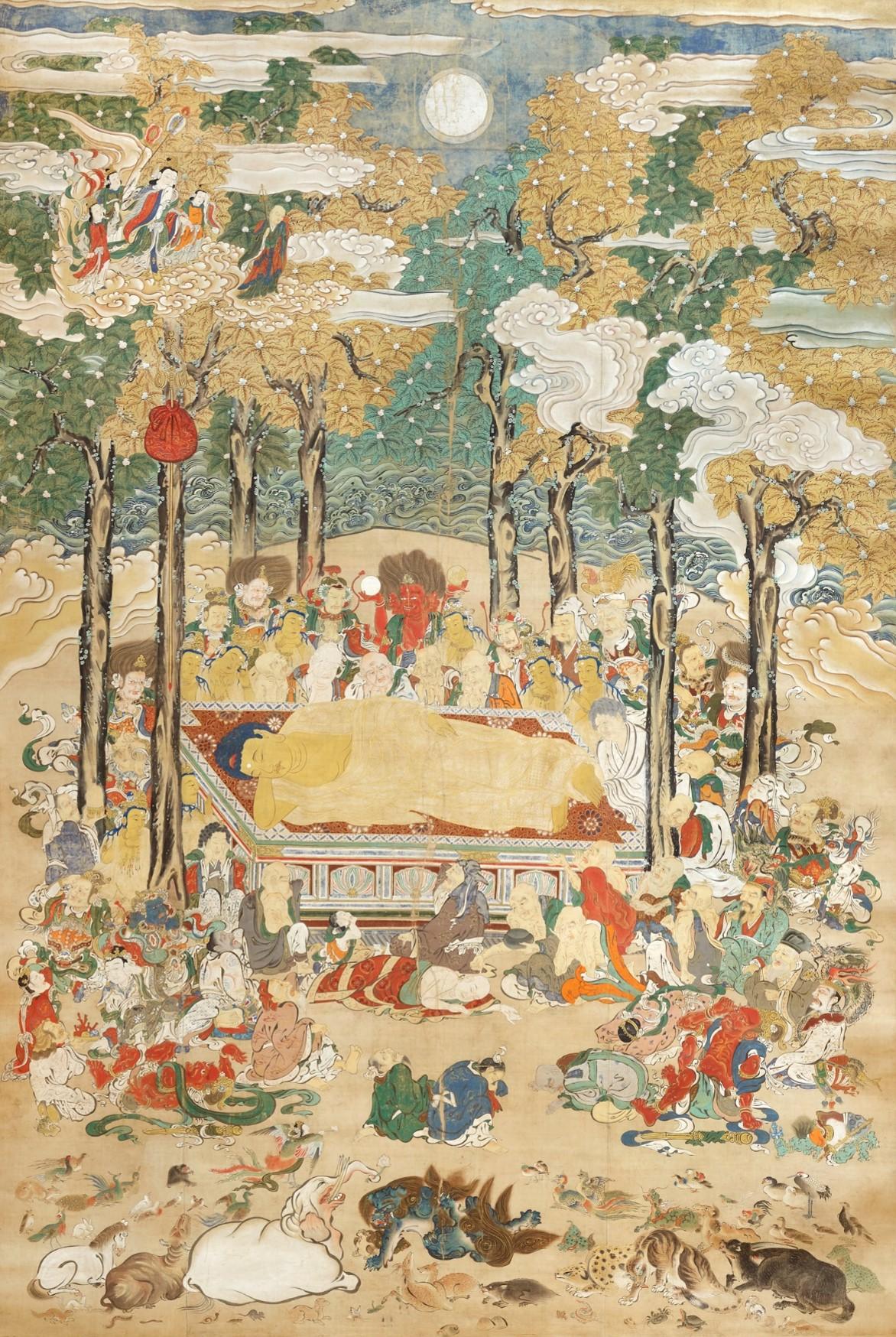
Specially on view through Dec. 28 is Parinirvāṇa of the Buddha (Butsu nehan-zu), portraying the Buddha Śākyamuni in gold.
1)
Standing Amitābha Buddha
Heian period, 12th century

First Public Display: A rare work of 90-cm-tall Amitābha, going back to the late Heian period

2)
Amitābha Buddha (hoben hosshinzo)
Muromachi period, 15-16th century
Shin Buddhism's principal image, or "dharma body of skillful means ." Standing aloft in space, Amitābha illuminates the world with the rays of light emanating from the entire body.

3)
Amitābha Triad, Zenkoji Temple Style
Edo period, 17-18th century
An unusual work rendering the principal image of Zenkoji in a painting, allowing male and female aspirants to be included in the foreground

4)
Descent of the Amitābha Triad (Amida Sanzon raigozu)
Muromachi period, 16th century
A typical representation of the Amitābha triads, popular since the Kamakura period (12-14th century). The body and robes of all divinities descending to welcome the dying are fully drawn in gold.

5)
Taima Mandala
Muromachi period, 16th century
Buddhas and bodhisattvas are illustrated with delicate and detailed brushwork. Bottom right is Chujo-hime, a legendary princess and creator of the mandala depicted as a nun.

6)
Seikai Mandala
Edo period, 17-19th century
A copy of Amitābha's Pure Land as seen in the vision of Seikai, a monk of Choshoji Temple, in 996. The lotuses on the border of the mandala have summarized inscriptions of sutras.

Special Display
Parinirvāṇa of the Buddha (Butsu nehan-zu)
Edo period, 17th century
Weeping and grieving bodhisattvas, disciples, and even animals surround the reclining Buddha as he enters final nirvana under the sala trees.
September 13-December 28, 2025